About
About Académie Olympia
Essays, original diagrams, and reading notes written for the simple pleasure of picturing how physics works from the ground up.
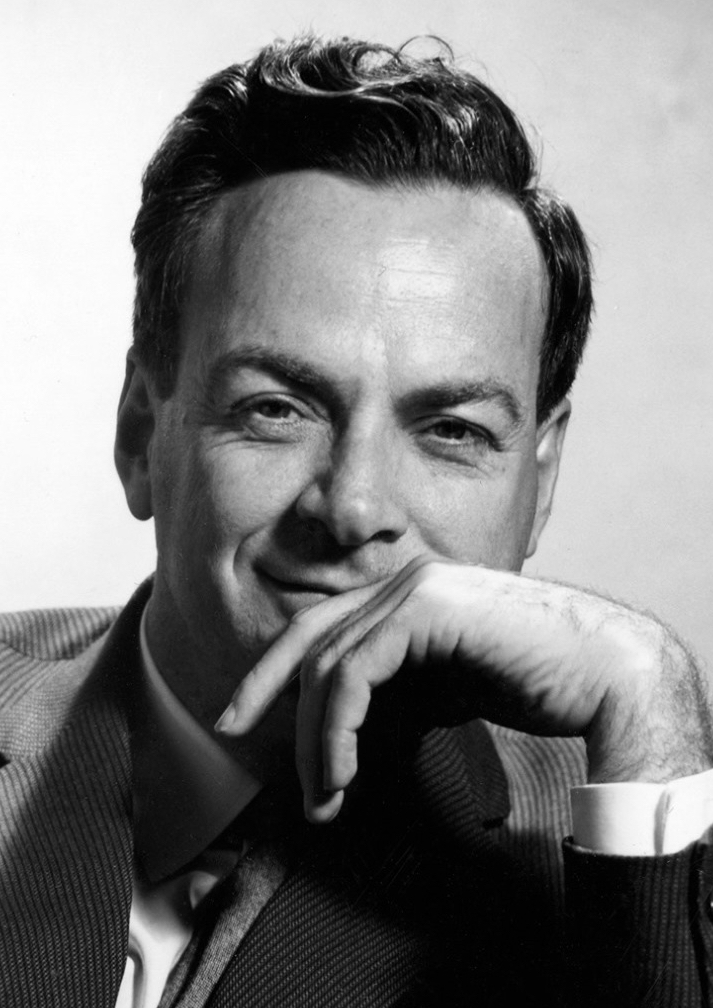
“I don’t see that it makes any point that someone in the Swedish Academy decides that this work is noble enough to receive a prize—I’ve already got the prize. The prize is the pleasure of finding the thing out, the kick in the discovery, the observation that other people use it—those are the real things.”
— Richard P. Feynman, The Pleasure of Finding Things Out
“I have no special talents. I am only passionately curious.”
— Albert Einstein, Letter to Carl Seelig, March 11, 1952
The Name
The 1902 Bern Reading Circle
In the spring of 1902 in Bern, three young friends with little money and no university posts began meeting in the evenings to read and argue about science and philosophy. Albert Einstein, then waiting for his job at the Swiss Patent Office, got together with the mathematician Conrad Habicht and the Romanian student Maurice Solovine. Over simple suppers of tea, Gruyère cheese, sausage, and fruit, they worked their way late into the night through Henri Poincaré, Ernst Mach, Baruch Spinoza, David Hume, and Sophocles.
Poking gentle fun at grander institutions, they called their three-person reading group the Akademie Olympia. It had no charter, no budget, and no committee—just stubborn curiosity, unhurried conversation, and the freedom to follow a physical question wherever it led.
academieolympia.org is kept in that same spirit: a quiet collection of working essays on wave mechanics, causality, closed time-like geometry, and the multi-scale structure of spacetime, written with the simple hope that physics can be pictured clearly as well as calculated.
Reading Notes
Quotations & Figures
Throughout these essays, passages from physicists and mathematicians are quoted directly from their published papers, books, lectures, and letters. Wherever words or phrases appear bolded or underlined inside a quotation, that emphasis has been added to call attention to the central physical ideas being discussed.
Original textbook diagrams and drawn figures throughout the site can be clicked to open in a larger reading view. The pages run with zero cookies, zero analytics, and zero third-party trackers.
Contact
Get in Touch
Corrections, references, or thoughtful notes on any of the essays or figures are always welcome by email.