Part 1
Closed Time-Like Curves
“Kurt Gödel’s essay constitutes, in my opinion, an important contribution to the general theory of relativity, especially to the analysis of the concept of time. The problem involved here disturbed me already at the time of the building of the general theory of relativity, without my having succeeded in clarifying it.”
Albert Einstein, “Reply to Criticisms,” in Albert Einstein, vol. 7 of the Library of Living Philosophers, ed. P. A. Schilpp (Evanston, IL: Open Court), pp. 687–688
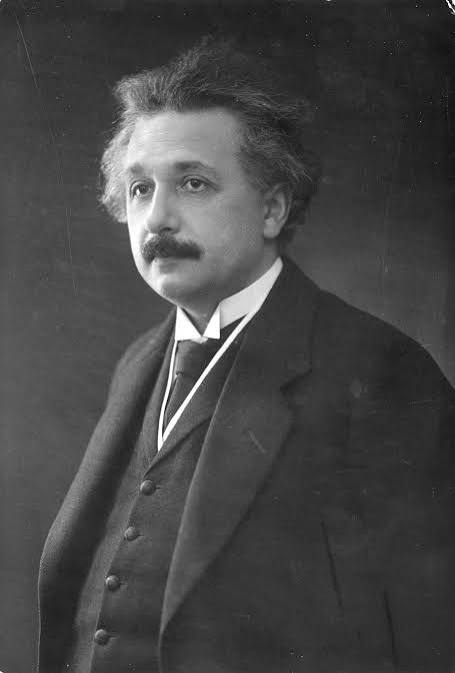
“Every world-point is the origin of the double-cone of the active future and the passive past. Whereas in the special theory of relativity these two portions are separated by an intervening region, it is certainly possible in the present case for the cone of the active future to overlap with that of the passive past; so that, in principle, it is possible to experience events now that will in part be an effect of my future resolves and actions. Moreover, it is not impossible for a world-line (in particular, that of my body), although it has a time-like direction at every point, to return to the neighbourhood of a point which it has already once passed through.”
Hermann Weyl, Space-Time-Matter (1952), p. 274
We saw in the earlier section “Time I” that quantum waves contain paths that flow into the past. It is interesting to me that a similar structure is present in general relativity.
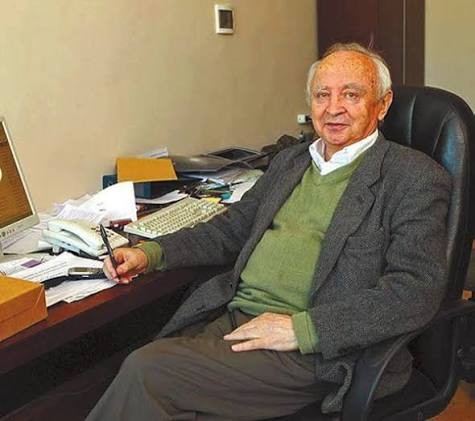
“This is the reason why I will talk now about the most daring dreams of physicists, about their most challenging ideas. The famous British physicist J. J. Thomson, who discovered the electron, said that among all the services that can be rendered to science, the most important is the injection of novel ideas. Actually, I am going to discuss the possibility of traveling to the past… The same is true for the ‘time loop’. We can say which of the nearest events belong to the future and which to the past. But this division cannot be applied to the time loop as a whole.
The loop has no clearly defined future and no past, and all events affect one another on a circle. Briefly and metaphorically speaking, we are under ‘double’ strong influence: without the time machine events are influenced by the flow of data from the past (but not from the future! This is the gist of the causality principle), while events on the loop respond to information coming from both the past and the future.
Therefore, with the time machine, today’s events must be consistent with (i.e., be determined by) not only the past but also the future! I formulated this self-consistency principle many years ago and now it appears to have been accepted by everyone who works in the time machine field. Recently I and my colleagues were able to prove that this principle can be deduced from the fundamental laws of physics. The future, the past, and the present are, in fact, ‘mixed together’… I am an optimist and believe in the enormous promise of this new field of research.”
Igor D. Novikov, The River of Time, pp. 231, 254, 263, 264
“By an extension of this line of reasoning it is apparent that the past and future of all particles are tied together by a maze of interconnections. The happenings in neither division of time can be considered to be independent of those in the other.”
J. A. Wheeler & R. P. Feynman (1945), Interaction with the Absorber as the Mechanism of Radiation, Reviews of Modern Physics, p. 181
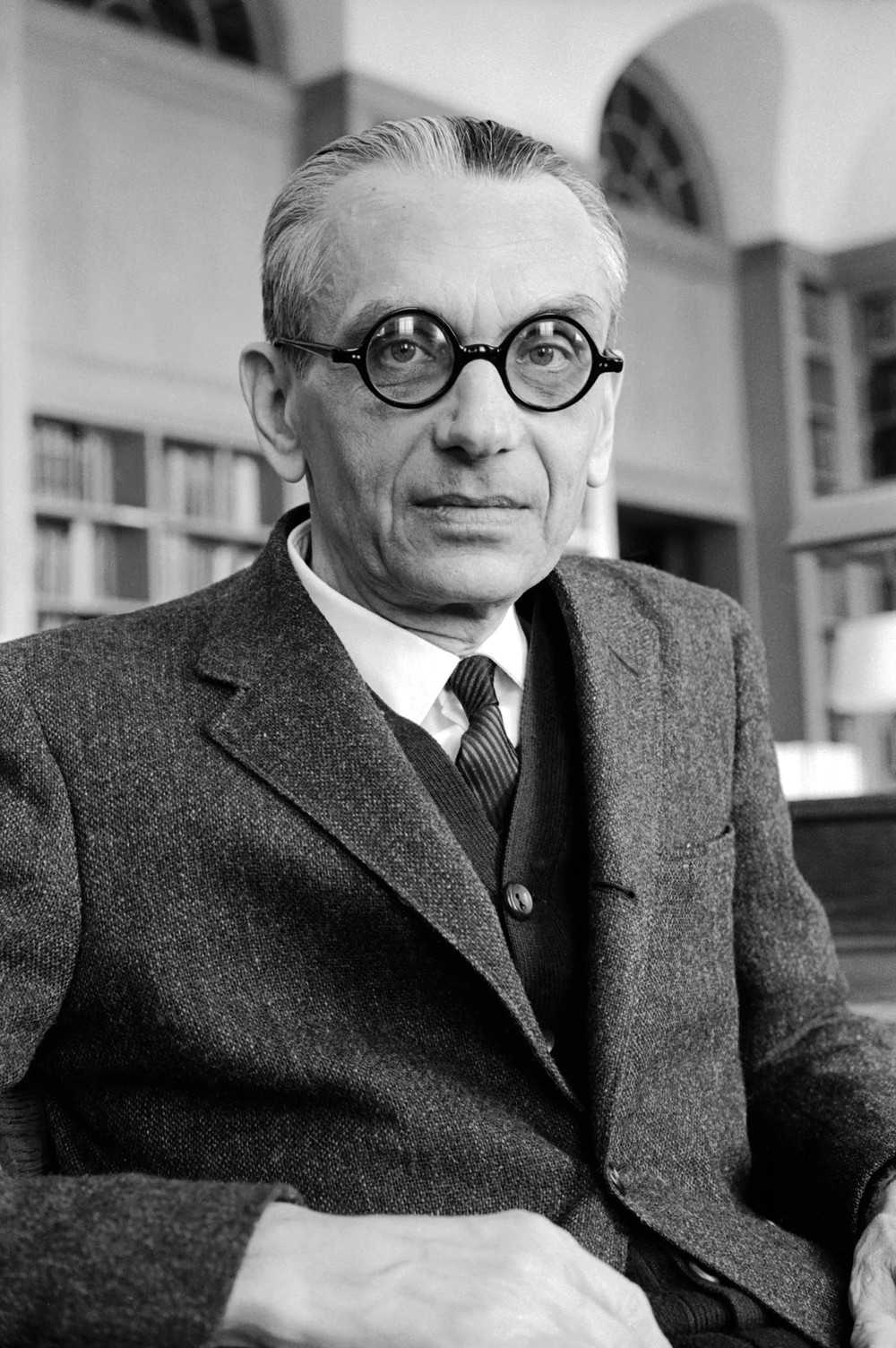
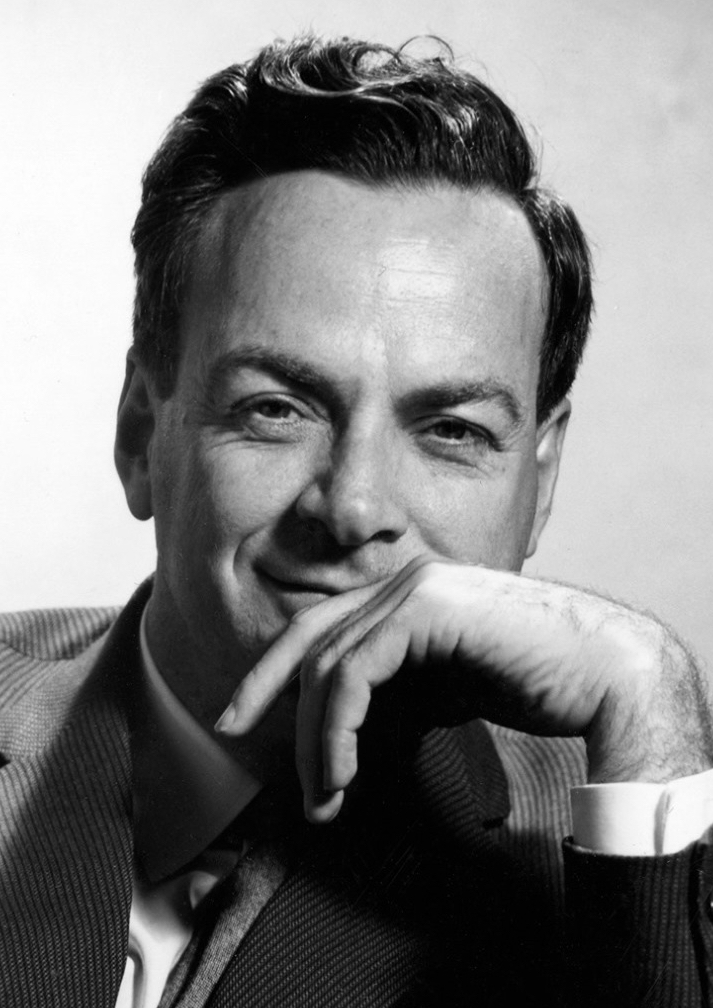
ARCHIVE PORTRAIT · PRINCETON Kurt Gödel (1906–1978), Institute for Advanced Study, Princeton.
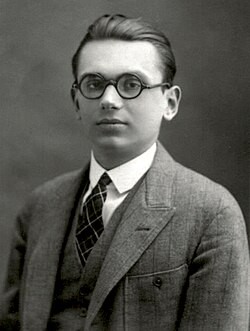
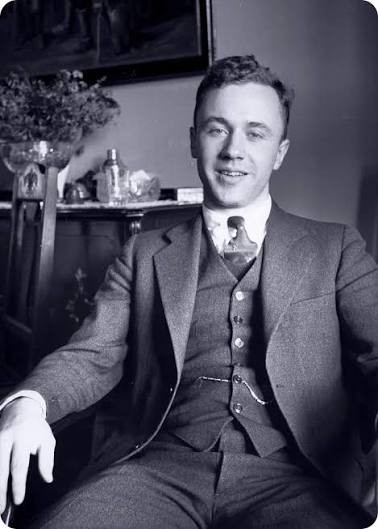
ARCHIVE PORTRAIT · VIENNA, 1925 Gödel as a student in Vienna, 1925. His 1949 cosmological solution showed General Relativity permits closed time-like curves.
“This solution, or rather the four-dimensional space S which it defines, has the further properties… It is not possible to assign a time coordinate t to each space-time point in such a way that t always increases, if one moves in a positive time-like direction… Every world line of matter occurring in the solution is an open line of infinite length, which never approaches any of its preceding points again, but there also exist closed time-like lines. In particular, if P, Q are any two points on a world line of matter, and Q precedes P on this line, there exists a time-like line connecting P and Q on which Q precedes P; i.e., it is theoretically possible in these worlds to travel into the past, or otherwise influence the past.”
Kurt Gödel, An Example of a New Type of Cosmological Solutions of Einstein’s Field Equations of Gravitation, Reviews of Modern Physics, vol. 21, no. 3, July 1949
“Because general relativity is a local theory with no a priori restrictions on the global topology, causality violation can be introduced into solutions quite easily by injudicious choices of topology; for example, we could assume that the timelike coordinate in the Minkowski metric is periodic, or we could make wormhole identifications in Reissner–Nordström space. In both of these cases the causality violation takes the form of closed timelike lines (CTL)… Still, it could be argued that the Gödel solution is without physical significance, since it corresponds to a rotating, stationary cosmology, whereas the actual universe is expanding and apparently nonrotating. The low-angular-momentum Kerr field, on the other hand, cannot be claimed to be without physical relevance: it appears to be the unique final state of gravitational collapse, and so Kerr black holes probably exist somewhere, possibly in the center of our galaxy. This field also contains nontrivial CTL, though the region of causality violation is confined within an event horizon… The final Kerr field with collapsed star could be causally well behaved, so the CTL pathology might still be eliminated from general relativity’s physical solutions.
I doubt this, because nontrivial causality violation also occurs in the field generated by a rapidly rotating infinite cylinder. The field of such a cylinder in which the centrifugal forces are balanced by gravitational attraction was discovered by van Stockum in 1936… If we shrink the rotating cylinder down to a “ring” singularity, we end up with the Kerr field, which also has CTL. These facts suggest that there is a region near the surface of a finite cylinder where gφφ becomes negative, implying causality violation.
Since H ≠ 0 for r ≠ 0, there are no event horizons around the infinite cylinder. By analogy with the static case, I expect this to be true for a finite cylinder; if so, then a timelike line from any event in the universe could enter the region where gφφ is negative and return to any other event. In short, general relativity suggests that if we construct a sufficiently large rotating cylinder, we create a time machine.”
F. J. Tipler, Rotating Cylinders and the Possibility of Global Causality Violation, Physical Review D (1974)
Part 2
Are There Closed Time-Like Curves in Quantum Mechanics?
“Above all, the ominous clouds of those phenomena that we are with varying success seeking to explain by means of the quantum of action, are throwing their shadows over the sphere of physical knowledge, threatening no one knows what new revolution.”
Hermann Weyl, Space-Time-Matter (1952), p. 212
Perhaps we can find examples of closed time-like curves in quantum mechanics. Superconductivity seems to have many properties of a CTC, specifically a stationary electric current.
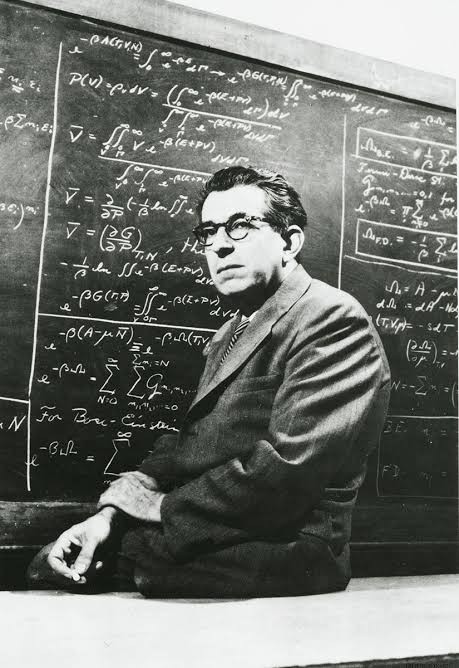
ARCHIVE PORTRAIT · FRITZ LONDON Fritz London (1900–1954) at the blackboard.
ARCHIVE PORTRAIT · SUPERFLUIDS Frozen-in magnetic flux inside superconducting rings as a unique topological property.
“Finally for stationary conditions we have:
curl E = −(1/c) ∂H/∂t = 0 (III.1)and, because of (2″), E = 0. In this case there is no electric field in the superconductor. However, this does not imply the absence of any electric current, because the latter is in the present theory linked to the magnetic field. In this way the theory accounts for perfect conductivity, that is, for stationary electric currents in absence of electric fields.”
Fritz London (1950), Superfluids: Volume I, Macroscopic Theory of Superconductivity, p. 33
“Energy is the generator of time translations.” Would points that lie on an equipotential experience time evolution relative to one another? Perhaps energy gradients are what push a system forward in time. That we call them closed time-like curves reminds me of the way a superfluid closes on itself in phase space. I mean, it’s the way a circle closes on itself. It comes back to exactly where it started. It resets. That’s what the phase does in a superfluid. It comes back shifted by two pi. It closes and starts again. This connection between time/entropy and electromagnetic energy is not as distant as one might imagine:
“There is a close analogy between the formalism of electrodynamics and that of thermodynamics.”
Fritz London (1950), Superfluids: Volume I, Macroscopic Theory of Superconductivity, p. 115
The Superconducting Ring. Conservation Law of the Flux Through the Ring
“According to our interpretation of the pure superconducting state, there is practically no magnetic flux in the interior of a pure superconductor… The existence of frozen-in fluxes, according to this view, is exclusively confined to non-superconducting holes surrounded by superconducting enclosures. This is a very interesting feature, namely, a topological property which is unique in physics.”
Fritz London (1950), Superfluids: Volume I, Macroscopic Theory of Superconductivity, p. 47
Part 3
Are Electrons Superconductors?
“Bohr’s Theory of the Atom has led to the idea that there are individual stationary orbits for the electrons circulating in the atom, and that they may move permanently in these orbits without emitting radiations; only when an electron jumps from one stationary orbit to another is the energy that is lost by the atom emitted as electromagnetic energy of vibration… We may distinguish two modes of determining a quantity in nature, namely, that of persistence and that of adjustment. This difference is illustrated in the following example. We may prescribe to the axis of a rotating top any arbitrary direction in space; but once this arbitrary initial direction has been fixed the direction of the axis of the top when left to itself is determined from it for all time by a tendency of persistence which is active from one moment to another… This does not explain why an electron itself after an arbitrarily long time still has the same charge, and why this charge is the same for all electrons. This circumstance shows that the charge is determined not by persistence but by adjustment: there can be only one state of equilibrium of negative electricity, to which the corpuscle adjusts itself afresh at every moment. The same reason enables us to draw the same conclusion for the spectral lines of the atoms, for what is common to atoms emitting equal frequencies is their constitution and not the equality of their frequencies at some moment when they were together far back in time.”
Hermann Weyl, Space-Time-Matter (1952), pp. 303, 308
Consider an electron in the ground state of hydrogen. It appears to be a “frozen-in flux” of electric charge. We might say that the electron in a stationary state is a dissipationless, perfectly conducting fluid. The stability of the electron’s phase flow is a “Chern number” or a “winding number.” There’s some integer quantity that’s associated with the topological structure of the phase flow of the electron in a hydrogen atom.
Here we recognize a connection between energy and stability. Systems that possess definite energy are, by construction, systems with stable quantum phase windings. We can say technically that energy = stability. This suggests a physical explanation for why energy is the generator of time translations: time translations are evolving correlations between systems, and these correlations are only as stable as the systems themselves.
“These conceptions lead to an interpretation of the stability conditions introduced by quantum theory. If, indeed, one considers a closed trajectory, the phase must be a single-valued function along this curve, and as a result one is led to write the Planck condition:
∮ p · dl = k · h (k integer) (III.2)The Sommerfeld conditions for quasi-periodic motions may also be derived. The phenomena of quantum stability thus appear to be analogous to phenomena of resonance, and the appearance of whole numbers here becomes as natural as in the theory of vibrating strings or plates.”
Louis de Broglie, quoted in Guido Bacciagaluppi & Antony Valentini, Quantum Theory at the Crossroads: Reconsidering the 1927 Solvay Conference (Cambridge University Press, 2009), p. 343
The analogy between stable, closed trajectories in QM and CTCs in General Relativity is clear in the following words from Schrödinger:
“The single stationary states of Bohr’s theory would then in a way be described by the eigenfunctions ψk, which do not contain time at all… On this view, the time variable would play absolutely no role in an isolated system — a possibility to which N. Campbell (Phil. Mag., [1] (1926), [1106]) has recently pointed. Limiting our attention to an isolated system, we would not perceive the passage of time in it any more than we can notice its possible progress in space, an assimilation of time to the spatial coordinates that is very much in the spirit of relativity.”
Erwin Schrödinger, quoted in Guido Bacciagaluppi & Antony Valentini, Quantum Theory at the Crossroads: Reconsidering the 1927 Solvay Conference (Cambridge University Press, 2009), pp. 408–409
Part 4
Is an Electron a Closed Time-Like Curve?
“This distinction between physics and geometry is false… physics does not extend beyond geometry… even matter itself is reduced to this kind of geometry and loses its character as a permanent substance. Clifford’s prediction, in an article of the Fortnightly Review of 1875, becomes confirmed here with remarkable accuracy; in this he says that ‘the theory of space curvature hints at a possibility of describing matter and motion in terms of extension only’. These are, however, as yet dreams of the future. For the present, we shall maintain our view that physical states are foreign states in space.”
Hermann Weyl, Space-Time-Matter (1952), p. 129
Feynman’s work on QED suggests the electron may be a closed time-like curve:
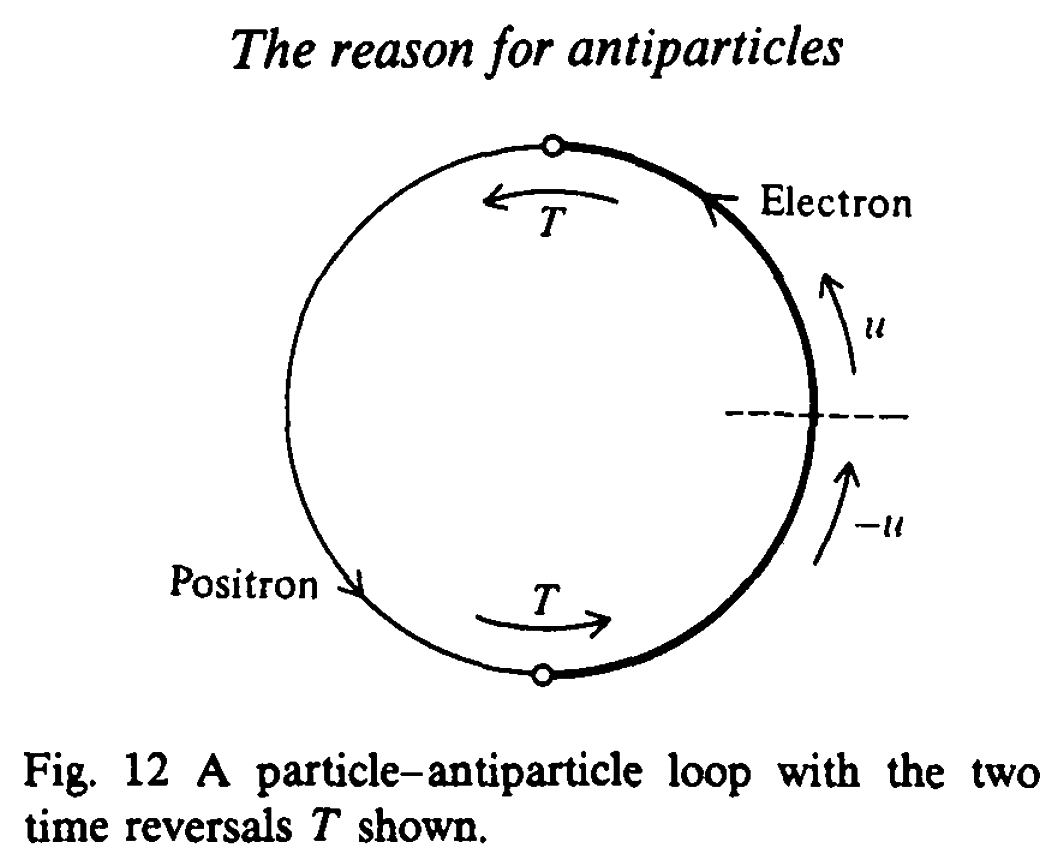
“Whatever frame you watch this process from, the electron at some stage changes into a positron moving backwards in time (one T), and then later turns back to an electron moving forwards in time (another T), so propagating round the whole loop you eventually come back to the state TTu; see Fig. 12.”
R. P. Feynman (1987), “The Reason for Antiparticles,” in R. P. Feynman & S. Weinberg, Elementary Particles and the Laws of Physics: The 1986 Dirac Memorial Lectures (Cambridge University Press), p. 47
The idea that the electron is a closed time-like curve is supported by Thomas R. Love, who gives the following description of Feynman’s work in his 1987 thesis The Geometry of Elementary Particles, page 114:
“The only charged particles are the ones involving time translation. Thus charge is interpreted as the curvature of time! Since particles are, in a sense, spacetime wrapped around itself, unwrapping a particle yields empty spacetime.”
Thomas R. Love, The Geometry of Elementary Particles (1987), p. 114
The overall framing is validated by Penrose:
“I do not believe that a real understanding of the nature of elementary particles can ever be achieved without a simultaneous deeper understanding of the nature of spacetime itself… The most important single lesson of relativity theory is, perhaps, that space and time are not concepts that can be considered independently of one another.”
Roger Penrose (1968), quoted in C. W. Misner, K. S. Thorne, & J. A. Wheeler (1973), Gravitation (W. H. Freeman and Company), p. 937
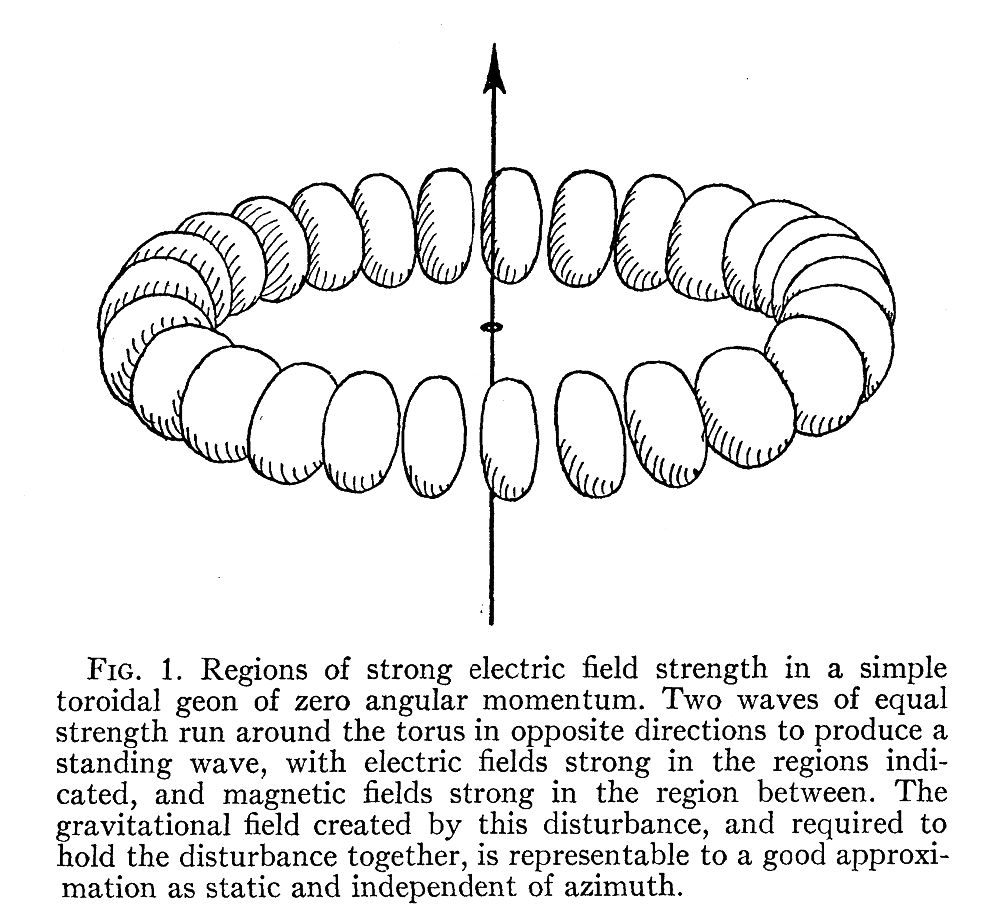
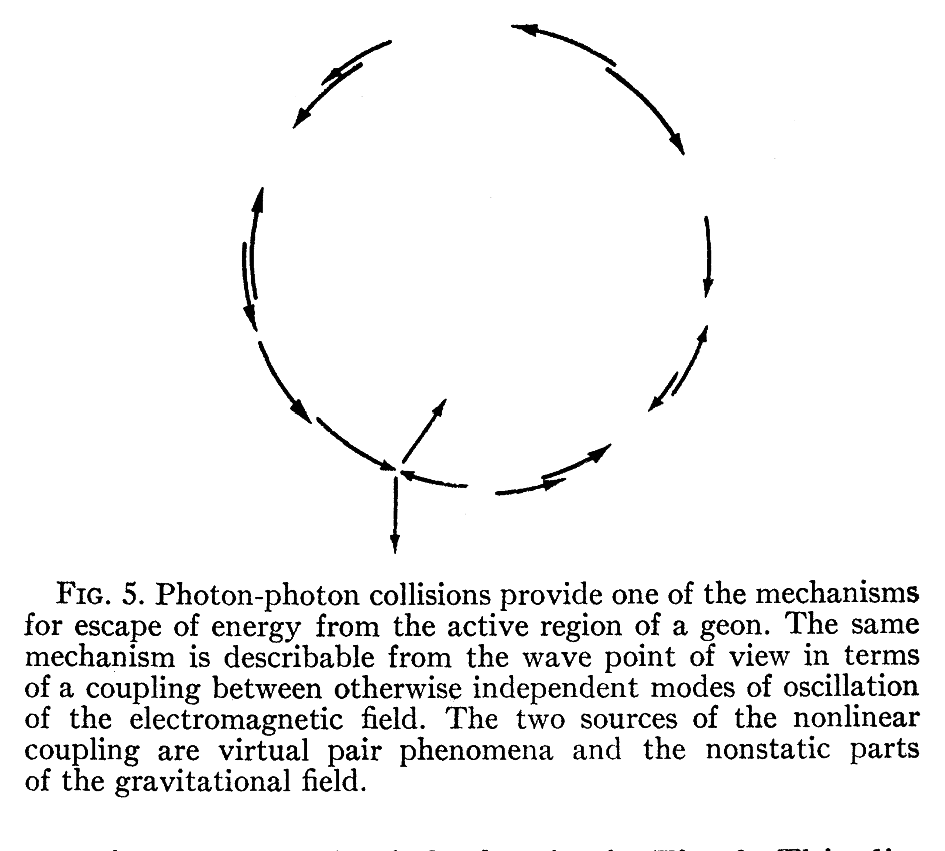
Like Feynman, John Wheeler’s work on electrons as geons contains suggestive diagrams, and he describes particles as “closed circular toroids.” Further, his belief that this idea serves “even to explain why there should be bodies” is reminiscent of what we saw in Part 3, where closed loops of phase explain the persistence of stable structures in quantum mechanics.
“Two waves of equal strength run around the torus in opposite directions to produce a standing wave… On the basis of classical general relativity as it already exists, and without any call on quantum theory, it turns out to be possible to construct an entity that we call a geon… The simplest variety (Fig. 1) is most easily visualized as a standing electromagnetic wave, or beam of light, bent into a closed circular toroid of high energy concentration… The existence of geons would seem to impart to classical general relativity theory a comprehensiveness for which one had not dared to hope. This theory turns out not only to account for the fields produced by bodies, and the motions of bodies, but even to explain why there should be bodies… Physics as rounded out by the geon concept forms the only fully comprehensive and self-consistent system of classical physics that we possess… In any such mode the energy is reflected back and forth in a standing wave limited by two values of r. Other parts of the energy go into unbounded waves and are lost to infinity. The existence of the barrier leakage phenomenon means of course that the distinction between the stationary modes and the unbounded waves is only approximate.”
John Archibald Wheeler, “Geons,” Physical Review, vol. 97, no. 2, 15 Jan. 1955, pp. 511–536
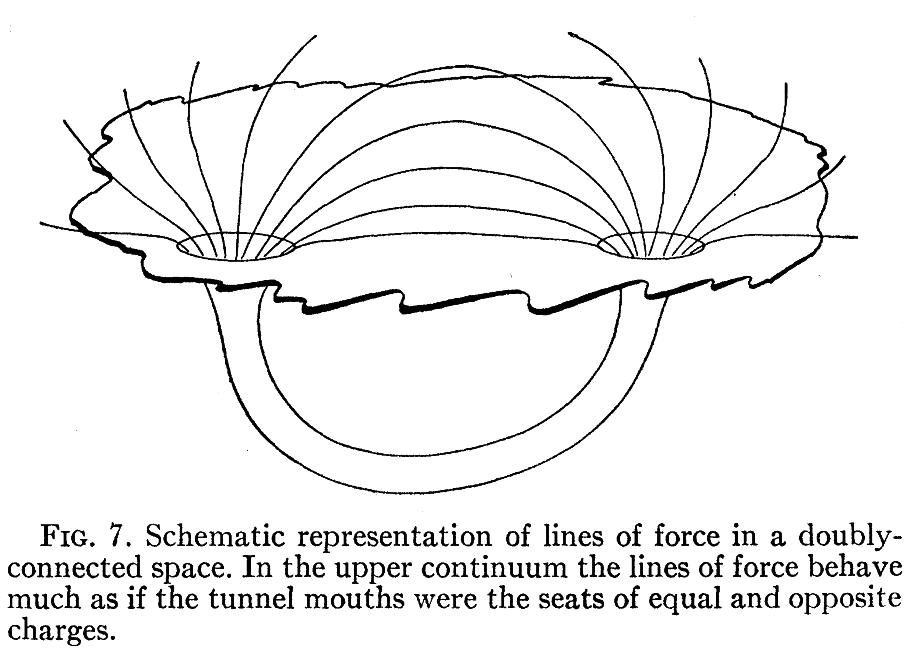
“Let one pass from the classical theory defined by the action principle (4) to the corresponding quantum theory, either by the prescription of Feynman (102), … in deriving Gauss’ theorem one is driven to consider an integral over the whole of the region in question, including regions of the very smallest spatial extension. Here the inevitable fluctuations force on spacetime a most complicated structure. Because it is the essence of quantum mechanics that all field histories contribute to the probability amplitude, the sum (102) not only may contain doubly and multiply connected metrics; it must do so. General relativity, quantized, leaves no escape from topological complexities of which Fig. 7 is only an oversimplified symbol… In conclusion, the geon makes only this visible contribution to science: it completes the scheme of classical physics for the first time with an acceptable classical theory of the concept of body.”
John Archibald Wheeler, “Geons,” Physical Review, vol. 97, no. 2, 15 Jan. 1955, pp. 511–536
Part 5
The Zitterbewegung Interpretation of Quantum Mechanics
“The reasons that drove us to new modes of explanation can always be traced back to contradictions and improbabilities that emerged from the older modes of explanation.”
Bernhard Riemann, Philosophical Fragments (1892)
It’s important to say that I did not discover David Hestenes’ “zitterbewegung interpretation of quantum mechanics” until after having supposed a connection between the electron and Gödel’s CTCs. I liked the idea of CTCs when I first heard of them in undergrad. I also liked the idea of electrons spinning. CTCs, I was told, were believed to be unphysical by the mainstream physics community, and the electron’s spin was said to be a “purely internal property associated with the pointlike electron.” I didn’t believe the electron was a point and by default I found myself imagining something spinning. I could not believe that angular momentum, so intrinsically associated with rotation, came to the electron purely through some abstract, mathematical property. All this to say, I was naturally skeptical of the mainstream consensus about electrons not spinning, and this made me think CTCs might exist as well. Once I imagined both of them might exist, the idea that the electron might be an instance of a CTC was a natural speculation.
It’s important to tell you this not for reasons of allocating credit for discovery, but because it explains why I find the idea compelling: because (1) it made sense to my physical intuition initially, and (2) that specific initial leap was then borne out by new information that supported my initial conjecture. Indeed, perhaps all of the quotes in this section “Whirlpools of Time” were unknown to me when I first conjectured that an electron might be a CTC. To me the idea itself has a quality of internal consistency and physical coherence that makes it inherently compelling. I do wonder if it is true. Hestenes’ work seems to suggest it is:
“The zitterbewegung plane wave solutions of the Dirac equation are curves of constant curvature… The most significant point to be made here is that the physical variables are hereby given a completely geometrical interpretation, so prospects are opened up for a geometrical interpretation of theory. The identification of the free electron solution with a particular class of paths with constant curvature suggests the possibility of classifying elementary particles according to curvature.”
David Hestenes, The Zitterbewegung Interpretation of Quantum Mechanics, Foundations of Physics, pp. 15–16
In Part 2 and Part 3 we saw (implicitly) the idea of phase, which plays the major role when talking about the phenomena of resonance in quantum mechanics. It would seem as if, in the case of the paradoxically “stationary currents” in superconductors, it is the phase itself that is rotating. While the orthodox interpretation of QM typically calls phase factors “nonphysical,” I believe Hestenes’ view of phase is more correct:
“The essential feature of the zbw idea is the association of the spin with a local circulatory motion characterized by the phase factor… The main point of the reformulation is to reveal geometric structure in the Dirac theory which is hidden in the conventional formulation… A simple change in the definition (i.e., interpretation) of the electron velocity implies that all components of the electron wave function (including its phase) directly describe kinematical features of electron motion… In general, six parameters are needed to specify an arbitrary Lorentz rotation. Five of the parameters in the Lorentz rotation (24) are needed to specify the direction of the electron velocity v and spin s. This also determines the plane containing e1 and e2, as shown in (27). The remaining parameter determines the orientation of e1 and e2 in the e2e1-plane. This parameter is the phase of the wave function, and here we have a geometrical interpretation of the phase. The vectors e1 and e2 are not given a physical interpretation in the conventional formulation of the Dirac theory, because the matrix formalism suppresses them completely… Observables in the Dirac theory represent averages over a zbw substructure… The phase factor literally represents a physical rotation, a zbw rotation. Operating on the phase factor, the pμ computes the rotation rates of the phase in time and space directions, identifying them with the energy and momentum.”
David Hestenes, The Zitterbewegung Interpretation of Quantum Mechanics, Foundations of Physics, pp. 3, 6, 12
Moving on from phase, let’s discuss matter. What is it? It is essentially connected with the idea of locality. Matter is energy which does not race away from us at the speed of light. In the previous part John Wheeler speculated that his trapped flows of light, his “Geons,” might explain “why there should be bodies”—in other words, why there should be matter. This idea might seem radical, but the fact that the energy of motion is a form of mass is well known:
“Inertial mass varies with the contained energy. If a body is heated, its inertial mass increases; if it is cooled, it decreases… every kind of energy exerts a gravitational effect: this is true not only of the energy concentrated in the electrons and atoms, that is of matter in the restricted sense, but also of diffuse field-energy.”
Hermann Weyl, Space-Time-Matter (1952), pp. 204, 232
In regard to the electromagnetic field specifically, it is a known fact that photons do curve spacetime when moving through it, so the conjecture that a ball of them could result in what we perceive to be localized curvature is not in violation of the basic principles of relativity. The following words from Hestenes describe the same physical picture as Wheeler, in which it is the circular flow of photons around CTCs which is responsible for the existence of the electron and perhaps locality itself.
“This strongly suggests that the ‘rest mass’ of the electron has a kinetic origin, but that can be so only if the electron has a velocity component in the spin plane… Of course, this means that the electron moves with the speed of light, as in Schrödinger’s original zbw model… This is a parametric equation for a lightlike helix… The diameter of the helix is the electron Compton wavelength… Thus, the spin angular momentum can be regarded as the angular momentum of zbw fluctuations… The zbw interpretation of the Dirac Theory, founded on the identification of the null vector:
u = e0 − e2 (III.3)as electron velocity, provides an explanation for the electron spin and magnetic moment in the circulation of momentum and charge. It also explains the mass as the energy of this circulation.”
David Hestenes, The Zitterbewegung Interpretation of Quantum Mechanics, Foundations of Physics, p. 11
Part 6
CTCs and Entropy
“I hope that the above considerations will have sufficed to make it clear that the difference between reversible and irreversible processes lies much deeper than that between mechanical and electrical processes. Therefore this contrast may, with more accuracy, be made the most convenient basis for partition of all physical phenomena, and may play the chief part in the physics of the future.”
Max Planck, A Survey of Physics: A Collection of Lectures and Essays, p. 14
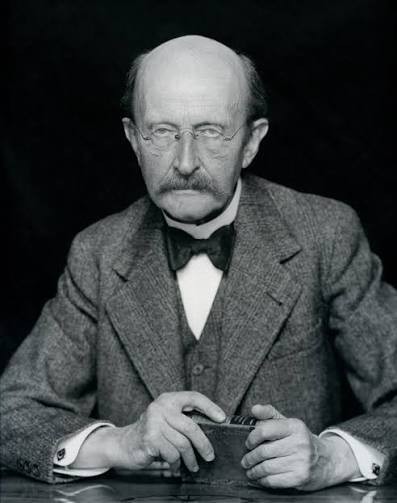
In this section I have investigated closed time-like curves as a general physical pattern in nature, suggesting that electrons and superconductors are quantum examples of general relativistic physics. My overall framing, in which I focus on the idea of cyclical, self-stabilizing processes—i.e., closed time-like curves—as an important kind of physical pattern worthy of special attention, is validated by Planck:
“In fact, all reversible processes, occurring in matter, ether, or both, show a much greater resemblance one to another than to any irreversible process. The consideration of the differential equations which govern them demonstrates this. In the differential equations of reversible processes the time differential always occurs in even powers only, corresponding to the condition that they are independent of the sign of the time… Reversible processes have the disadvantage that they, all and sundry, are ideal. In Nature there is not a single reversible process, since every natural operation more or less involves either friction or conduction of heat. The principle of least action is no longer applicable when dealing with irreversible processes, for the principle of increase of entropy introduces into physics an entirely new element foreign to the principle of least action, and which claims special mathematical treatment.”
Max Planck, A Survey of Physics: A Collection of Lectures and Essays, pp. 13–14
Let’s note something Wheeler said: “Other parts of the energy go into unbounded waves and are lost to infinity. The existence of the barrier leakage phenomenon means of course that the distinction between the stationary modes and the unbounded waves is only approximate,” and something Planck said: “In Nature there is not a single reversible process, since every natural operation more or less involves either friction or conduction of heat.” Do these statements contradict the existence of closed time-like curves? No, they merely illustrate that the degree of closure or openness of a causal flow is a relative feature. Consider a superconductor. Can it really be said to conduct with zero resistance? No, no object can be completely thermally isolated from its environment. And besides, on a long enough time scale the experimenter will terminate the experiment by turning off the “air conditioning,” causing the superconductor to be torn apart by outside energy. The superconductor remains relatively causally isolated as a function of how well and how long it is insulated from the outside environment. The same is true of an electron in the ground state of a hydrogen nucleus. It is in a “stationary state” only as long as it remains isolated from the external environment. Due to the continuous, non-local nature of wave mechanics, the electron in the ground state is never absolutely isolated from the outside world.
A whirlpool in water is a good analogy for the relative stability of closed curves. The water molecules that are carried about in its flow may come back to more or less the same point they departed from, but eventually, due to its coupling with the outside environment, the whirlpool will dissolve and the molecules will return to the linear causal flow. This fluid analogy is equally suited to general relativity and suggests a fundamental physical connection between wave mechanics and relativistic mechanics:
“General relativity has completely reshaped our ideas of space and time. Neither is an invariable scene on which the dramatic history of the Universe is acted out. Space is not an infinite rigid skeleton. Moving matter is constantly warping it, changing its geometric properties. The acceptable part of the naive notions of our predecessors about the all-encompassing, immutable time river is gradually dwindling. As we see now, it does not flow everywhere with equal grandeur: it is rapid in gorges but slow over shallows; we will see later how it splits into numerous streams, brooks and rivulets, which move forward at different speeds, depending on ‘local’ conditions.”
Igor D. Novikov, The River of Time, p. 94